Pages

Sunday, 14 June 2015

BPD & Stigma

I’ve decided to explore the stigma attached to it here and why this is so damaging and often unfair.
Adding to the long list of symptoms that come with BPD is a deep stigma attached to BPD. Not only by the general population but specifically by mental health professionals. I personally work in the mental health field and the amount of negative comments I have heard from people is sickening. I have heard that:

“BPD can’t be diagnosed properly because they’re (those suspected to have it) all liars and attention seekers.”

“Ugh people with PD’s are so fucking difficult.”

“People with personality disorders are usually the ones who end up as criminals; real psychos.”

“I reckon my old boss had BPD, she was so manipulative all the time.”

These are completely unfair and unfounded accusations. Like people with mental illnesses do not have it hard enough, putting these negative labels on them further increases belief that being around us is impossible. Treating those with BPD badly like people often do only furthers our self-destructive behaviour. If you tell me that I must be an attention seeker and liar because of my diagnosis, I will believe you and I will hate myself even more. That is why it is so vital to spread understanding of mental illness; the stigma is so harmful to those with mental illnesses who are already vulnerable.

There is such a strong negative attitude towards those with BPD and is often because it is so difficult to treat. Do you know what will make it more difficult to treat? Making assumptions about the people who are being treated. This is a crass analogy but if someone assumed that a car worked in a certain way because they had been told this, they would then struggle to fix the car if it in fact did not work in this way. Someone who attempts to treat a person with BPD while believing that they must be manipulating you is completely irresponsible.

If you know someone with BPD then you will know that while they experience negative emotions intensely, they experience positive ones like this too. A person with BPD is not always in a state of anger/depression/anxiety and difficult to be around. They can also be fiercely loving, loyal and friendly. Please refrain from judging someone because you are scared that you will be unable to deal with their feelings. That is horribly selfish. You do not have to experience life like this, the least you can do is understand and show some empathy rather than passing judgment based on what you have read/been told.

People with BPD can be manipulative. This does not mean that everyone who is manipulative has BPD or vice versa. Being manipulative is often the only way that borderlines understand that will help them get something they need. It is unfair to think of manipulation in a wholly bad way. Manipulation does not make someone a horrible person.

Further to this, it is widely believed that everyone with BPD is violent. This is due to the knowledge of anger management being a common difficulty with the diagnosis. True, some people with BPD can have violent tendencies. However, it is much more common for someone with BPD to physically hurt themselves rather than others. Again, the strong belief in this from so many people leaves those diagnosed with BPD being feared. This would be detrimental to anyone’s well-being, more so when that person has a mental health issue.

Now comes the worst thing I have heard about Borderline Personality Disorder is something which I get angry just writing about. There are some psychologists out there who felt it would be beneficial to diagnose Hitler with BPD. Getting a mental illness diagnosed is hard enough but finding out that someone who was so beyond evil is suspected to have the same mental illness makes it terrifying. However, diagnosing historical figures is often highly inaccurate so please remember that. To any professionals, please stop adding to the already existing stigma surrounding this condition.

The important thing to remember is that Borderline Personality Disorder can be treated. We are often led to believe that having a mental illness is something that is awful and long lasting and impossible to overcome. This simply is not the case. There are medication options, therapy options such as DBT and mentalisation and lots of other things out there to help. I wish that access to these services was easier because I know how hard it is to live with this. However, it is possible to live with it and have healthy relationships and function despite what people might have told you. You do not and should not feel ashamed if you have BPD. The stigma is based on ignorance and misunderstanding.

Living with BPD; the highs, lows and madness

Trigger warnings: self harm, suicide

I was diagnosed with Borderline Personality Disorder last year. For me, the diagnosis was extremely helpful. The word ‘borderline’ with this does not mean almost a personality disorder as many assume. I wanted to share some thoughts on living with BPD and hopefully help some people feel less alone and offer a little bit of hope.

First and foremost, BPD leads to people feeling extremely intense emotions. Here’s a recent example of this from me: I got upset because I was unable to go out with friends and did not want to miss out on anything. It is natural to be upset. But, this quickly became an intense sadness that completely took over and resulted in self-harm. Rationally, I know that this was not helpful and frankly, an overreaction. At the time, I could not contain the sadness that turned into anger and self-harming was my way of relieving some of this intense emotion. 

To someone without BPD, emotions come and go and intense emotions are often a result of an intense situation. For those with BPD, emotions are often intense and lasting. While this means anger and sadness can be dangerous emotions with BPD, it also means that people with BPD tend to be very enthusiastic and friendly and fun to be around when emotions allow it. This shows that BPD does not have to be all negative all the time and it is possible to enjoy the company of someone with BPD.

Due to experiencing such intense emotions, it is very common for people with BPD to shut down. It is like a huge build-up of pressure in a container and we know it will soon explode so we just turn it off. We have difficulty regulating our emotions and so feeling nothing is better.

On top of all of this, people with BPD also experience mood swings very often. These often involve depression, anxiety and anger. There can be no obvious trigger to these mood swings and take it from me, they can be exhausting!

Another thing I would like to mention is feelings of shame. Before my diagnosis, I had noticed that feeling embarrassed or humiliated had a profound effect on me. If I was embarrassed by something, I would still be playing it over in my head and hating myself for it years later. Turns out that this is common with BPD.

Borderline Personality Disorder is often accompanied by substance abuse. For me, it was alcohol. At the time, I was unaware of BPD but I did know that alcohol numbed emotions for me. When sober, I felt everything all the time and it was draining. Having a drink would stop me thinking and feeling anything deeply. Obviously, alcohol is a depressant so in the long run is very damaging for someone with a mental illness.

BPD is also commonly joined by eating disorders and self-harm. These are other things which I have personally experienced. For self-harm in particular, I have always used it to relieve emotions. I get really really angry so I cut myself and feel better. Feeling better is fleeting though because then comes along the guilt and shame. In the moment, it feels as though nothing else will help but in the long run, it harms more. A pretty vicious cycle, right? While harming oneself might seem counter intuitive to mentally well people, it is very common among those with BPD. It provides relief from intense emotions that we have no other way of dealing with.

On to a topic that anyone close to me understands well, relationships with others. Before my diagnosis, I was very aware that I was clingy and insecure in friendships and romantic relationships. No matter how hard I tried to stop this and change the way I was around people, I could not do it. I still have not managed to do it but knowing it is part of BPD eases the self-hatred relating to it.
I have always been sensitive to rejection. Any of my friends will tell you that if I ask them to hang out and they say no, I will not react well. I will either believe that they hate me or will isolate myself from them so they cannot leave me. I am insecure and people often find it annoying that I need constant reassurance. Luckily, I have found friends who are willing to give that reassurance. It does not stop the insecurity but makes it more manageable. It is very easy for me to think that everyone I know hates me and will leave me because I hate me so much.

It might seem that being friends or in any relationship with someone with BPD is difficult. It can be at times, yes. But, if you take the time to understand the illness then it gets easier. If you know to offer reassurance and not be dismissive etc. then it will be possible to have a good relationship. This idea that people with BPD cannot have healthy relationships is bullshit. It is more difficult but it is not impossible. See here for an old post about my relationship before I knew we both had BPD!

One of the symptoms of BPD that is often misunderstood and unfairly focused on is manipulation. I hold my hands up and admit that I can be manipulative. Until recently, I would beat myself up about it. That was until my therapist asked me why I was being manipulative. People manipulate in order to get a need met. I do not manipulate people to hurt them, I rarely do it consciously. It is often very subtle but I do it because there is a lack of something which I need. My way of getting it just happens to be manipulation because expressing that I need something from a person is difficult for me.

Self-harm and suicide attempts from those with BPD are often thought to be part of their manipulation. Sometimes they are but that is not to be quickly judged. Imagine what someone must be going through to think the only way they can get love or attention is to hurt themselves. When I first realised that I had self-harmed in order to get attention from a friend who had been ignoring me, I was horrified with myself. I was about 16 and upon realising what I had done, I immediately started thinking that I was the worst person in the world. 

We are constantly getting sent the message that anyone who hurts themselves for attention or validation is bad. This is not true. They are often hurting and scared and do not know what else to do, it is a desperate act. It is damaging to assume that any self-destructive behaviour is only used to manipulate others into responding in a certain way.  

BPD often leads to difficulties having a strong sense of self; people tend to have difficulty knowing what they like or value or struggle with setting any goals. This is something which leads to a lot of indecisiveness, something I have trouble with on a daily basis. I am also prone to adopting attributes of characters in film, tv and books. I do this because I often doubt myself and everything about me. By turning myself into someone else that obviously knows who they are, I then feel a stronger sense of who I am. Obviously, this is not the healthy way to develop knowledge of you but it stops the fear and empty feeling.

People with borderline personality disorder often struggle to concentrate. This is hardly surprising considering all the stuff going on in our heads on a daily basis. The lack of concentration can often lead to dissociation, a type of “zoning out.” It is often clear when someone is in this state as their face and voice might become expressionless. Dissociating is the mind’s way of avoiding intense emotions or painful memories. This can be helpful until it starts to happen with normal, every day emotions which everyone should be able to experience.

There you have it. I have, by no means, covered everything but this gives a bit of an overview of what it is like to live with Borderline Personality Disorder. Next blog post about it will focus on the stigma attached to the condition.

My life, my choice.

I am a woman and I do not want children.

This statement is frequently met with a gasp, a sad face or the worst – “oh don’t be silly, you’ll change your mind one day.”

How is it, that in the 21st century, society is still set on the idea that all women must want children? I remember thinking when I was much younger, when other girls were discussing potential kids names and dreaming of weddings, that I did not want children. People told me then I would change my mind which is fine, I was only a child myself. But, I am now an adult and people continue to shame me because I do not want children. Not now, not ever. Imagine if you had a plan for your life and people constantly told you that you would change your mind or that it was ridiculous for you to have said plan.

There are so many reasons why I do not want children. However, I do not see why I should need to justify this very personal decision. I am made to feel like a bad person because of this and it is completely unfair.

Women are more than potential mothers. Having children does not determine a woman’s worth. We have come a long way in terms of women’s rights regarding sexuality and freedom. If I do not want children, society cannot force me into having them. Unfortunately, it seems that much of society will continue to shame me for this decision.

People will often say “how can you not want children?” It is pretty easy to not want them actually and this question makes it seem like an awful thing. I am not denying anyone their right to have children; I am just choosing not to have them myself. This does not impact on anyone but me and my partner. Keep your judgements to yourself or better yet, start to understand that not all women want children and that is okay. Some women long to be mothers, others dread the thought of it.
My lack of desire to bear a child does not make me a bad person. Do not react in horror at a woman expressing that they do not want to be a mother. They will have their reasons for this and your judgement is not wanted. Who are you to say that all women must want certain things for their lives?

Alternatively, it is generally better accepted for a man to say he does not want children. A perfect example of double standards and of the underlying belief instilled in people that women are meant for motherhood.

Some women want children and that is okay. Some do not and that is also okay. Either way, it is none of your business why or whether they will change their mind. Surely it is better for a woman to not have children than to have them because she is pressured into it by society’s expectations?
I am a woman and I do not want children. If you have a problem with that, I do not want to hear about it.

Monday, 25 May 2015

Berlin

I grew up in a family who constantly struggled with money. Mostly, I am grateful for how my parents managed to get by. One thing that, as a teenager, bothered me was that we had never been abroad on holiday. Every summer, kids would come in with stories of their travels to warmer climates and I would have to share my summer stories which were not quite so exciting. Upon arriving at university, the divide between those who had travelled and I became even more annoying. Everyone had amazing stories about trips they had been on with friends and family. But still, I could not afford to get a passport let alone pay for a holiday. Then adult life started and I got myself one of those job things which pay (very poorly) so I recently took my first trip abroad to Berlin.

I loved Berlin. As a graduate of History, it really was the best place for me to go. Berlin is a city that is very aware of its history and clearly wants to remain at peace. In my time there, I walked past 2 peace talks happening in the streets about Israel. I also saw a sign urging Putin to leave Ukraine alone. It seems that there are people in Berlin who are actively advocating peace which is amazing to see considering the amount of cities across the world full of hate and war.

Another wonderful thing about Berlin is how clean it is. Rarely did we come across rubbish in the streets. More importantly, recycling is a huge thing there. When you buy drinks in plastic bottles, you will often notice that they have already been recycled. People are encouraged to recycle and they get to see that recycling is actually happening. It left me wondering why we do not have that in Britain at all…

The Judisches Museum in Berlin was one of the highlights of the trip for me. It was so great to learn about Jewish history outside of the holocaust, to learn about positive Jewish messages and people. There was a part of the museum dedicated to 17th/18th century businesswomen Gluckel of Hamlen which was so interesting. On top of this, the architecture of the building by Daniel Libeskind was amazing. It seems to have been designed to be slightly unsettling and uncomfortable, perhaps to portray the feelings of many Jewish people living in Germany. The same can be said of the Holocaust Memorial. It felt strange to me to see people taking smiling selfies in the middle of it. The paths in between the 7,211 grey blocks are not straight to walk on giving you an unsettling feeling. Germany has made great efforts to remember their history.

I was in awe of the architecture in West Berlin – the Reichstag, the museums on Museum Island, Berliner Dom, and Brandenburg Gate. It was all incredible to see. There are also a lot of gorgeous water fountatins throughout the city. These make the city feel less like a city, along with the large green spaces throughout. The Lust Garten was my favourite of these, it has a view of the Berliner Dom and Altes Museum as well as a lovely water fountain. Sitting there and reading was absolute bliss!


The Berlin Wall was really interesting to see. I had learnt so much about it throughout education and particularly at university. It was something that I had always wanted to visit. The longest standing part of the Berlin Wall really gives a sense of the desperation and negativity that many Germans faced from its beginning to end. Walking along it and seeing how high it is and knowing about the struggles so many people faced was actually quite moving. Upon arriving at Checkpoint Charlie, I noticed a McDonalds built right next to it. It seemed rather apt considering the continuing American influence in the West. Even taking the train through East Berlin to West, the contrast is stark. The East still looks like part of a struggling country which feels damaged. Whereas, the West has made a much quicker recovery and looks more modern and generally better cared for.


There are decorated bears throughout Berlin which are so lovely to see. This began with an artistic event in 2001. The bears are all unique, often brightly coloured and attract lots of attention. There has also been the emergence of united buddy bears which are intended to promote peace and love around the world.


If I had to pick a few things for people to see/do in Berlin, it would be:
·         - Visit the Berlin Wall, walk along it, remember the history
·        -  If you are unaware of the history, visit the DDR museum. It’s interactive and not as dull as the German Historical Museum (which was a total yawn fest, I felt like I was just reading a book and having to walk around whilst doing it…)
·         - Eat currywurst (seriously, it might sound gross to you but it is a Berlin favourite. I absolutely loved it. Sausage in curry sauce, it does not get much better!)
·        -  Jewish Museum
·         - See the Reichstag Building, Brandenburg Gate and Holocaust memorial. They are all really close together and very impressive.

Next stop: well, I’m currently trying to decide between Copenhagen, Bruges and Budapest. Any other suggestions?

Saturday, 16 May 2015

GE 2015: we have every right to be angry!

Over a week ago, the general election results came in and showed that the Conservative party would be in power for the next 5 years. It has taken me some time to get over initial rage/despair and be able to articulate my feelings about this and what it means for Britain. There are a lot of people who seem confused at the anger being shown. A common saying has been ‘the people who are upset should have voted.’ Well, we did vote and that is exactly why we are angry.

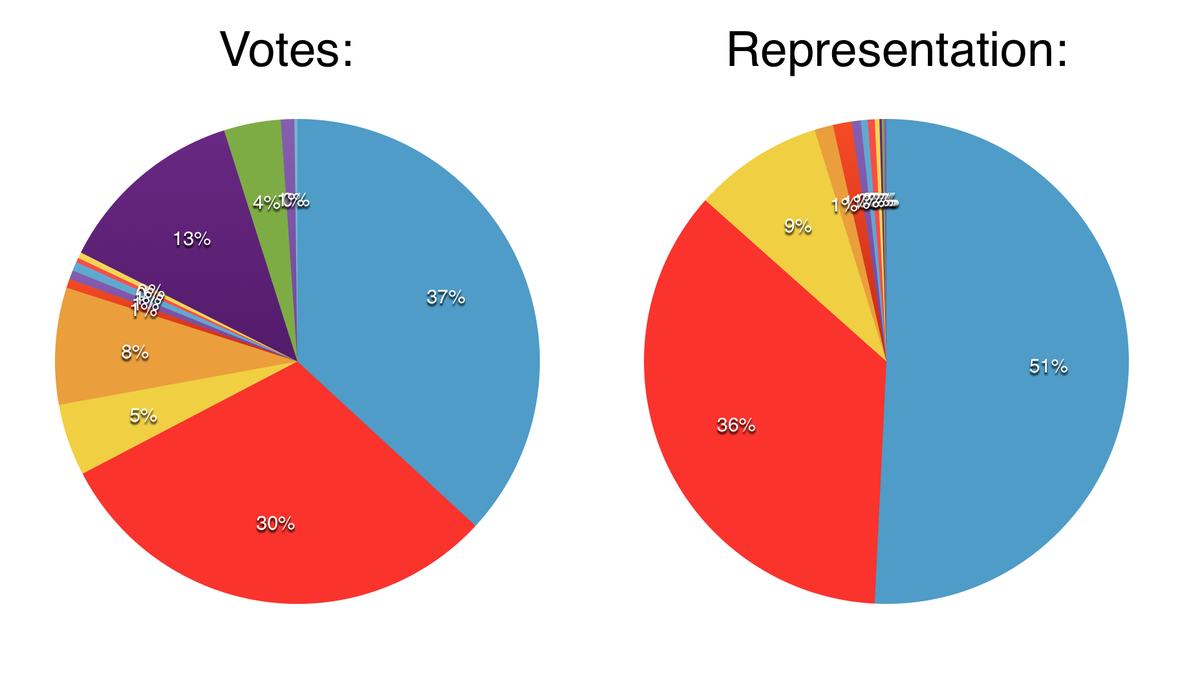
Britain is supposed to be a democracy. We have the right to vote and that is wonderful however, our votes are not used in a fair system:


This essentially shows that the proportions of voters do not match up to the representation of parties in parliament. So conservatives get 37% of the votes but 51% of the seats in parliament. This diagram shows exactly what is wrong with the voting system we have.

It is known as ‘First Past the Post’. Yet another political term which very few people understand, it’s almost as though they don’t want us to understand. Anyway, FPTP means that whichever party get the most votes wins the election. This leads to elections being a competition between two parties, Labour and Conservative in the UK.  

The current system often results in tactical voting which a lot of people will own up to. This is voting for a party to make sure another party does not get into power i.e. voting Labour to avoid a Conservative government. So there is something wrong here, isn’t there? People are not voting for the policies they agree with, they are simply voting against parties that they do not agree with because the system calls for this. 

This is where the talk about ‘wasted’ votes comes in, not wanting to vote for a smaller party because it will not make a difference. You’re probably right. In the current system, it will not make a difference so that is why people are calling for a complete change of the system. In the 2015 general election, it appears that more people voted for smaller parties and this took away votes from Labour leading to a Conservative victory.

It all just sounds a bit unjust, doesn’t it? Why should we continue with a system which benefits bigger parties but ignores smaller parties successes?

“This is how it works here, just deal with it.” I have heard this so many times in response to complaints about the UK voting system. And no, I will not just deal with it. I imagine that when women were fighting for the right to vote, they had similar responses. Do not let anyone make you think that change is not possible, that we will always be in an unfair system. This is what politicians and the media want you to think. It is much easier and nicer for everyone if we all sit back and accept the bullshit that they are forcing down our throats. Well, I would like to think that I would rather have a long and difficult process of making things better than sitting back and letting the country continue to decline.

So what are our options?

Proportional representation is one that many people are asking for. This would mean that a party which received 37% of the votes would then get 37% of the seats in parliament. Proportional representation seems like a good answer. It means that we would have a fairer system whereby parliament would more closely reflect the wishes of the voters. This system would be a lot more fair for smaller parties. Whatever your opinion on UKIP, for example, they received a lot of votes in this election and it is only right that they should therefore be represented in this proportion. The current system is only beneficial for the bigger parties. That is not okay!

The UK had an Alternative Vote referendum back in 2010. The voters rejected this way of voting which sees voters ranking candidates by preference. Again, people are pointing to this and saying “you had a chance to change it and nobody wanted it.” There was a chance to change it, yes. However, that was 5 years ago. There are now people eligible to vote who were not back then. There have been huge changes in the country and people’s lives. There are other options; it does not have to be AV. Having a complete overhaul of a political system takes a long time, a lot of work and one referendum 5 years ago cannot tell us that people do not want change now.

Why are people so fiercely anti-conservative?

A vote for the conservatives can be seen as a vote against women, the LGBTQ community, people of colour, anyone with a disability, the poor and the vulnerable. If you are rich, heterosexual, white British and have no disabilities then the conservative government probably will not damage your life much.

However, we live in a very diverse country. Here are some conservative policies which would have horrible consequences for so many members of the public:


  •  Repeal of the Human Rights Act – this is to be replaced with a British bill of rights. There are several ways this could be done and we are waiting to see what the Tories go for. The impact will vary but overall, is set to be negative for Britain.
  •  Welfare cuts - specifically £12bn worth of cuts. We are yet to find out where these will come from. You might not rely on welfare; you might think that those who do are just lazy. But, the majority of those on benefits need them to survive. The conservative government is fine for working people. Those who cannot due to mental illness, disabilities or any other reason are set to suffer a great deal in the next 5 years. This could lead to starving families, an increase in rates of depression/suicide and a whole lot of other problems. If you are wealthy then please think for a second. Is a reduction in your tax at the end of the 5 years really worth the suffering of millions who rely on our welfare system? (N.B. this is the austerity stuff you keep hearing about. Essentially, the government will be trying to better the economy by taking money from the poor and vulnerable.)
This all sounds awful, what can we do to change it?

Do not give up. Do not let anyone make you think that protests and petitions and campaigns are pointless and will never work. Yes, it will take time but change is inevitable. Stay passionate about changing things. Remember all the potential repercussions of conservative policies and a continuation of FPTP. Be as active in politics as you can. Show the politicians that they should be scared. They cannot stop the people from getting what they want/need/deserve – a fair and just system that represents the whole of society and not just the rich.

Check out facebook,twitter, tumblr, local groups and find ways to be active in politics.

(To those complaining about the protests based on one person spraying graffiti onto a war memorial – I understand that it is incredibly disrespectful. But, paint can be removed. The damage that this government and subsequent ones under FPTP cause could be irreparable.)